Tools built running stores, ready to run yours.
Every tool here ran in the field first, inside a multi-billion-dollar retail operation,
refined across hundreds of stores. Each ships as a single file that runs in your browser:
no account, no subscription, no upload. Your financials and your people data never leave your
machine: no account, no upload, and nothing you enter is sent anywhere; turn your network off and
every tool still works. Pricing is shown at checkout, and delivery is instant. Every tool is delivered complete
the moment you buy it, so all sales are final; if a download ever fails,
support replaces it.
The store carries 71 tools across seven kinds of work: Find the Money, Merchandising and the
Category, Run the Week, Build the Bench, Stay Open, Handle the Incident, and Automate the Work.
Five of the 71 are loops. A loop holds a whole operating cycle in one file instead of one job:
locations and people are entered once, and each stage reads what the last one found. The tools
inside a loop still sell on their own; the loop is the integrated version of that work, not a
discount bundle.
- The Inventory Loop: Measure, Read, Count, Explain, Reset.
- The Week Loop: Walk, Report, Recognize, Listen, Meet, Reset.
- The Month Close Loop: Analyze, Recover, Review, Plan.
- The Plan Loop: Budget, Plan, Period, Case.
- The Bench Loop: Hire, Onboard, Certify, Develop.
Find the Money
Sales look fine and the profit does not follow, or it does follow and you want to know which decision earned it. These size the gap in dollars, name the line that caused it, and print something you can hand to a landlord, a lender or a supplier.
P&L Analyzer
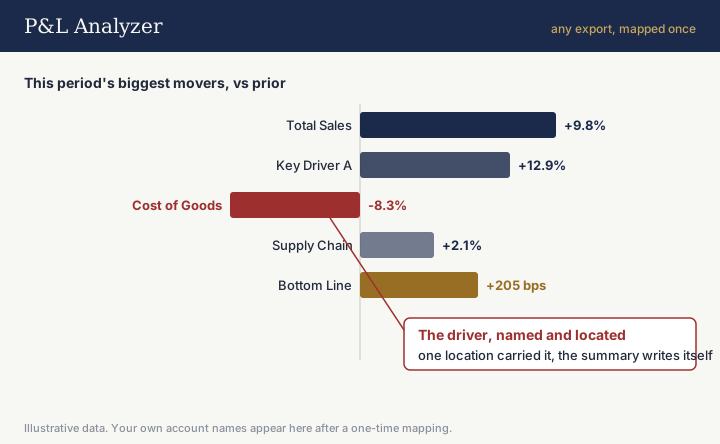
Upload the P&L your system already exports. A one-time mapping step reads any
layout; the analysis names the driver and the location behind the month, in your own
account names, and writes the executive summary for you.
After this: The Peer Review P&L Meeting Kit.
Illustrative data shown
Buy the P&L Analyzer
The Quick Win Planner
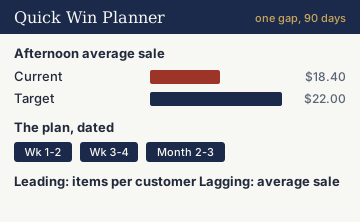
One opportunity, worked properly. Current against target, the gap, the likely cause, and a dated 90-day plan with the leading indicator that tells you early and the lagging one that settles it. Prints for a team.
Before this: The Peer Review P&L Meeting Kit. After this: The Business Case One-Pager Kit.
Buy the Planner
The Occupancy Cost Gap Analyzer
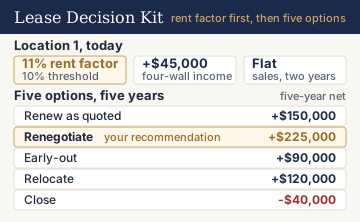
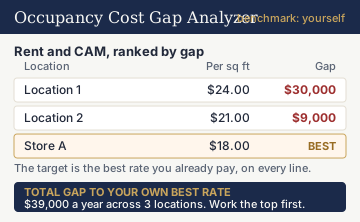
Rent, utilities, repairs, insurance and taxes for every location, normalized per square foot and benchmarked against your own best location, which is the comparison a landlord cannot argue with. Sizes the gap in dollars, flags a repair line trending up while the others trend down, and prints a landlord-ready summary.
Before this: P&L Analyzer. After this: The Lease Decision Kit.
Buy the Analyzer
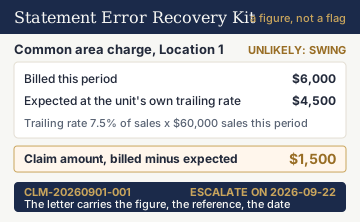
The Statement Error Recovery Kit
Paste a unit statement. The implausibility screen finds the lines that cannot be true, recomputes each at your own trailing rate so the gap becomes a claim amount, and builds a dated dispute letter with an escalation date already in it. A recurrence log shows which counterparties keep doing it.
Before this: P&L Analyzer. After this: The Statement Recovery Automation Pack.
Buy the Kit
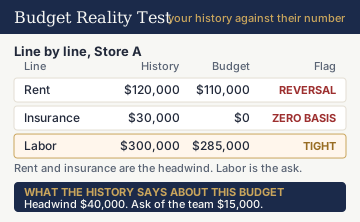
The Budget Reality Test
For the franchised and the financed: next year's proposed budget beside three years of your actuals. Flags lines that assume a direction your history contradicts, totals the headwind you cannot control, forces the sub-account decomposition before anyone reacts, and prints the half-page ask to whoever wrote the number.
Before this: P&L Analyzer. After this: OGSM for Operators.
Buy the Test
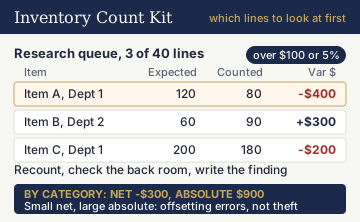
The Physical Inventory Count Kit
Type the count date and the pre-work dates itself backward. The two catches that manufacture most unexplained variance happen before lunch on day one, the crew briefing prints as one sheet, and the variance threshold sends lines to a research queue instead of a shrug.
Before this: The Inventory Performance Calculator. After this: The Shrink Plan Builder.
Buy the Kit
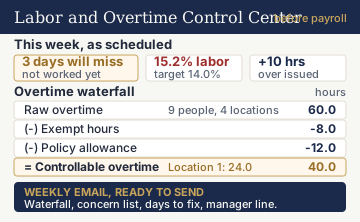
The Labor and Overtime Control Center
Paste scheduled hours, actual hours and sales by location and day. Flags the days that will miss the target before they are worked, builds the overtime waterfall by location and manager, goal-seeks the hours that hit the number, and writes the weekly email. A nineteen-question workload check tells you whether the problem is the schedule or the work.
Before this: The Team Coverage Calendar. After this: The Labor and Overtime Automation Pack.
Buy the Control Center
OGSM for Operators
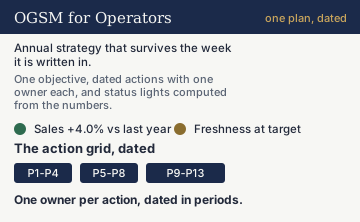
Most annual plans are dead by week three because the goals never became dated actions with owners, and the review that would have caught it happens once, at year end. This tool carries one plan from a one-sentence objective down to a dated action grid, then runs it - a completeness check that will not let a goal pass without a measure or an action pass without an owner, status lights computed from entered actuals on a retail-period calendar, a period review with commentary by area, and a year-end review that grades execution and rolls unfinished work into next year's draft.
Before this: The Budget Reality Test. After this: The Store Business Plan Builder.
Buy the System
The Store Turnaround Kit
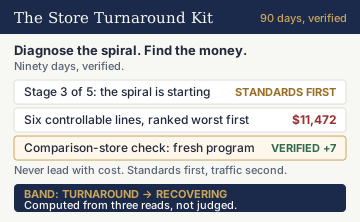
A sliding store gets the same two moves every time -- cut hours, discount everything -- and both feed the slide instead of stopping it. This kit places the store on the decline spiral, finds the recoverable dollars trapped in six controllable expense lines plus the gross-income a modest sales-and-margin gain would pay, and assembles a 90-day plan on a weekly cadence with a comparison-store check so a claimed win is never just seasonality.
Before this: P&L Analyzer. After this: The Store Business Plan Builder.
Buy the Kit
The Store Business Plan Builder
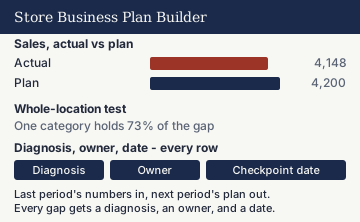
You review your numbers every month and nothing changes, because the gap never gets a named cause or a date. This tool turns last period's actual-versus-plan into a ranked scorecard, forces every lagging spot into a diagnosis-and-prescription pair with an owner and a checkpoint, and builds the one-page plan and review calendar that grades it next cycle.
Before this: OGSM for Operators. After this: The Peer Review P&L Meeting Kit.
Buy the Builder
The Peer Review P&L Meeting Kit
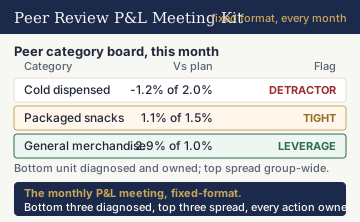
The month closes, the same P&L meeting happens, and nobody leaves owning anything before the same variances come back next month. This kit replaces it with one agenda that never changes: every line as actual versus budget versus last year, the bottom three diagnosed down to the location with an owned prescription, the top three mined and spread, and category detractors answering to their peers with a dated, by-location action plan.
Before this: P&L Analyzer. After this: The Quick Win Planner.
Buy the Kit
The Inventory Performance Calculator
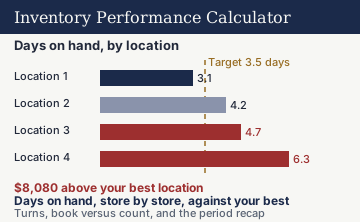
Purchases against sales tells you a department is leaking; it does not tell you whether the shelf and the walk-in are carrying too much. This calculator turns the sales and inventory dollars you already track each week into days on hand, turns, and a comparison against your own best location in the same department and week, so the dollars sitting above the benchmark -- and the book-versus-count variance behind them -- are visible before the write-off, not after.
Before this: Purchase-to-Sales Tracker. After this: The Physical Inventory Count Kit.
Buy the Calculator
The Shrink Plan Builder
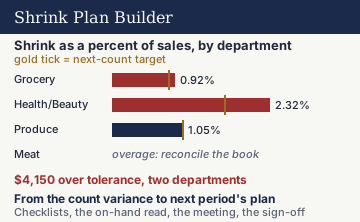
A count posts a variance by department and the manager writes a cause on the form; the next count posts the same number because nothing between the two counts was scheduled, owned or dated. This tool turns that variance into next period's plan: a daily and weekly checklist chosen by what the numbers say, the on-hand and negative-on-hand read, the journal recap split into identified and unknown loss, the claims, refund and markdown lines that feed shrink between counts, a weekly shrink meeting with the departments ranked, and a next-count target written down before the period starts.
Before this: The Physical Inventory Count Kit. After this: The Markdown Cadence.
Buy the Builder
The Markdown Cadence
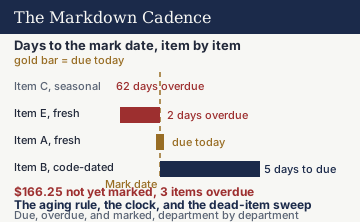
A count variance already explained and planned still leaves a leak the plan does not close: the shelf between counts, where an item ages past the point it should have been marked and the next count finds it as shrink. This tool turns your aging rule, your weekly markdown and markup, your truck and receiving line, and your dead-item sweep into one weekly discipline, department by department, with a pre-count checklist that keeps the count itself clean.
Before this: The Shrink Plan Builder. After this: The Product Line Exit Process.
Buy the Tracker
The Inventory Loop
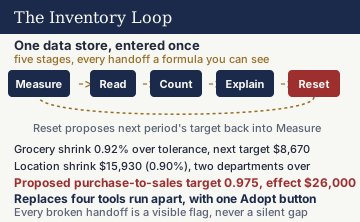
Run the purchase-to-sales read, the days-on-hand read, the count and the shrink plan apart and the same departments and locations get typed in four times, with every number carried between them by hand. The Inventory Loop holds departments, locations and weekly figures on one data store, entered once, and runs the cycle in order: Measure, Read, Count, Explain and Reset, with every handoff a formula you can see and a visible flag the moment one breaks, ending in a next-period purchase target you approve, never one that sets itself.
Before this: Purchase-to-Sales Tracker. After this: The Shrink Plan Builder.
Buy the System
The Month Close Loop
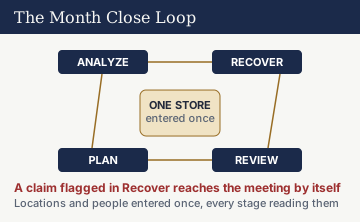
A multi-unit leader closing the month opens four separate files and types the same locations into all of them, and nothing one tool finds ever reaches the next until someone remembers to bring it up. The Month Close Loop runs Analyze, Recover, Review and Plan on one data store, entered once: a statement error flagged against a location's own trailing history reaches the monthly meeting's diagnosis by itself, the worst-ranked location's cause opens with the largest unfavorable swing on file, and a passing diagnosis seeds a ninety-day plan instead of a blank page.
Before this: P&L Analyzer. After this: The Quick Win Planner.
Buy the System
Merchandising and the Category
The assortment, the shelf and the launch. What to carry, what it earns per foot, whose brand goes on it, and how a category gets built rather than just replenished. This is the work that grows a top line instead of trimming a bottom one.
Purchase-to-Sales Tracker
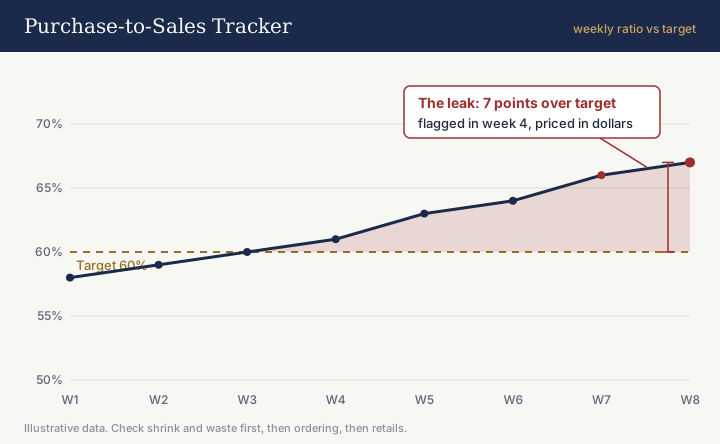
The fresh-department margin gauge: weekly purchases against sales, by department,
against your target ratio. Surfaces the leak in week one and prices the drift in
dollars, before the P&L can.
Before this: The Sales Planning Cadence. After this: The Inventory Performance Calculator.
Illustrative data shown
Buy the Tracker
The Review Score Sprint
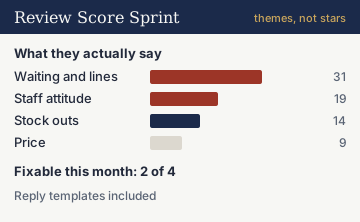
Your reviews, read properly. Sorts what customers actually complain about into themes, separates what you can fix this month from what you cannot, and gives you the reply templates and a thirty-day plan.
Before this: The Customer Path Scorer. After this: The Review Score Automation Pack.
Buy the Sprint
The Trade Area Analyzer
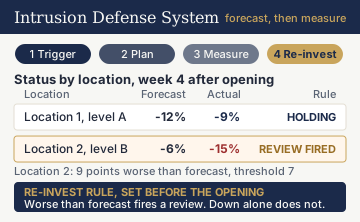
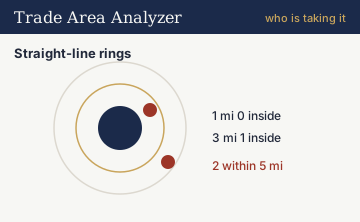
Who is actually in your trade area, and who is taking it. Straight-line rings, competitor overlap, and the gap between the customers near you and the customers you get.
After this: The Competitive Intrusion Defense System.
Buy the Analyzer
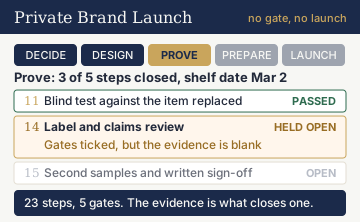
The Private Brand Launch System
Twenty-three steps and five gates for taking a private brand from an idea to the shelf, built fresh food and beverage first. Every step carries its own date, counted backward from launch, and no step closes until the evidence behind the gate is actually there.
Before this: The Category Strategy Deck. After this: The New-Item Take-Rate Scorecard.
Illustrative data shown
Buy the Launch System
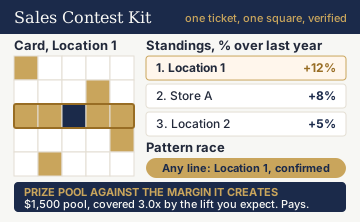
The Sales Contest Kit
A bingo-style contest for a quarter. One transaction marks one square, a named verifier confirms every claim, prizes hold until the returns window closes, and standings run on percent improvement so a small location can beat a big one. Cards, rules, tracker, prize budget check, message cadence, launch checklist.
Before this: The Seasonal Readiness Kit. After this: The Field Newsletter Kit.
Buy the Kit
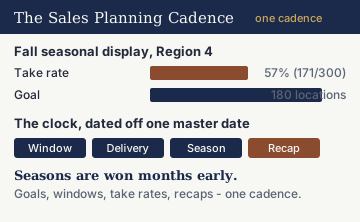
The Sales Planning Cadence
Seasonal money gets ordered months before the selling day, and a window that nobody is counting closes with half the locations sitting out and the other half holding product with no exit plan. This tool runs the whole cadence: an annual clock of order windows and deliveries, one card per program with the break-even math done for you, goals by group set before the window opens, a dated take-rate tracker while there is still time to chase it, and a recap with the next-cycle opportunity built in.
Before this: The Category Strategy Deck. After this: The New-Item Take-Rate Scorecard.
Buy the Builder
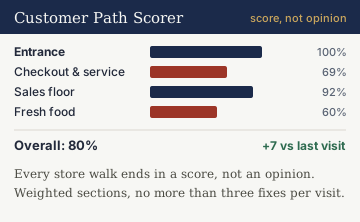
The Customer Path Scorer
Two people walk the same location and come back with two different opinions, and the same miss returns next month because nothing was written down. This tool turns the walk into a scored instrument with anchored questions, a weighted read-out, and a coaching conversation capped at three fixes.
Before this: Store Walk Kit. After this: The Review Score Sprint.
Buy the Scorecard
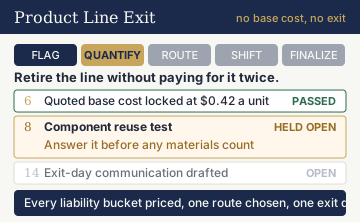
The Product Line Exit Process
A dying line usually gets two moves -- mark everything down or just let it run out -- and both leave the dollars on your side of the table. This kit prices the exit into four liability buckets, forces the component reuse test before materials count, and puts the indemnification ask in writing so the final number lands as booked savings instead of a write-off.
Before this: The Markdown Cadence. After this: The Category Strategy Deck.
Buy the Kit
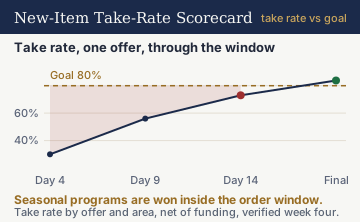
The New-Item Take-Rate Scorecard
A seasonal or limited-time offer is bought once, in a short order window, and whatever a location does not order is missed until next year -- but most owners never see the take rate until the window has already closed and the buy is committed. This scorecard turns dated order counts into a live read by offer and by area against a goal, prices the break-even net of vendor funding, and closes with a week-four sell-through pass so a strong take rate is proven to have actually sold.
Before this: The Sales Planning Cadence. After this: The Product Line Exit Process.
Buy the Scorecard
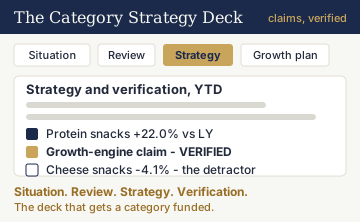
The Category Strategy Deck
The annual category deck dies every year because it is rebuilt from a blank slide, its numbers are pasted by hand, and its claims assert things nobody in the room can check. This kit fixes the argument's spine - computed review and year-to-date tables with pace against plan, a claim workbench that ships each claim next to the rows that prove it - then assembles the slide outline, a one-page-per-category mode, and the one-number roll-up that holds the plan to account.
Before this: The New-Item Take-Rate Scorecard. After this: The Sales Planning Cadence.
Buy the Kit
Run the Week
More locations than days. These turn a visit, a week and a team into a repeatable cadence that produces the same quality of report whether you got to every site or not.
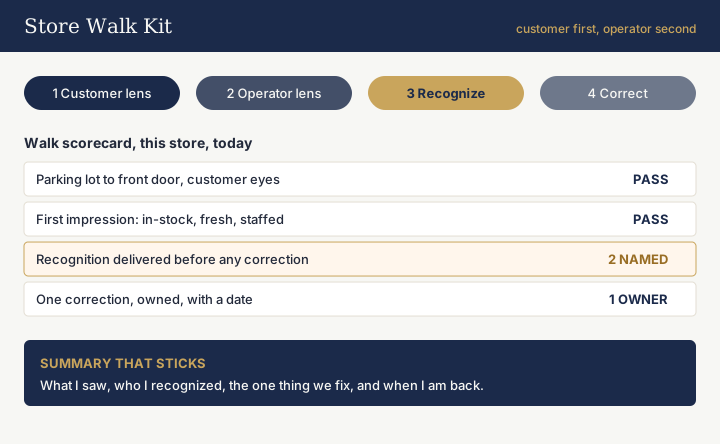
Store Walk Kit
Store walks from the sales floor to regional leadership, distilled into one interactive kit: the customer-first
walk flow, recognition before correction, scorecards, and a summary that sticks.
Ready to run on your next visit.
Before this: Field Leader Template Pack. After this: The Store Walk Automation Pack.
Buy the Walk Kit
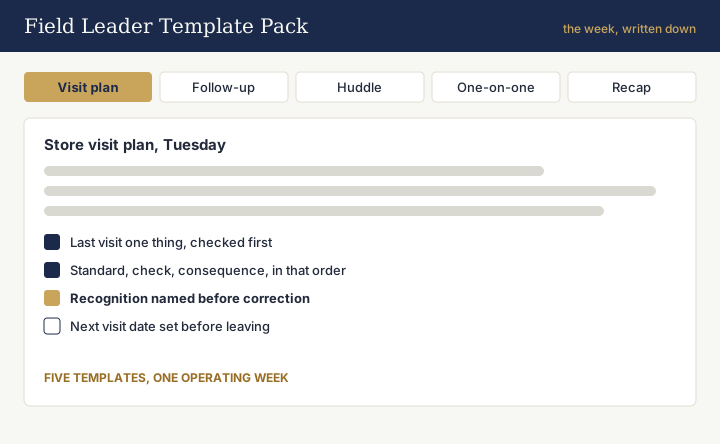
Field Leader Template Pack
A multi-unit leader's week runs on the same five conversations over and over, and without a template each one gets reinvented from scratch or skipped under pressure. This pack gives you a timeboxed staff meeting agenda, a week planner that shows where the floor time actually went, a GROW-model coaching conversation, a quick-win recognition tracker, and a one-on-one agenda built around their topics first, ready to use on day one and consistent across every store you run.
Before this: The Annual Event Planning Calendar. After this: Store Walk Kit.
Buy the Template Pack
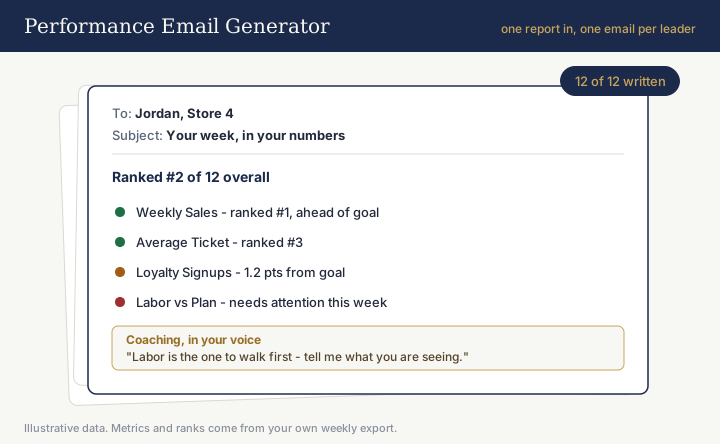
Performance Email Generator
Upload your weekly report and every leader on the team gets an individual, specific
performance email in your voice: their numbers, their rank, what went well, and what
needs attention.
Before this: The Weekly Field Report Engine. After this: The One-on-One Operating System.
Illustrative data shown
Buy the Generator
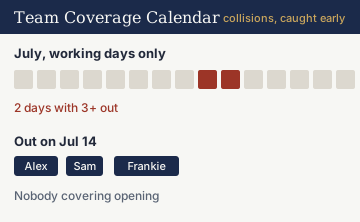
The Team Coverage Calendar
Time off across a team, with the collision caught before it happens. Flags the days three or more are out, skips closures and non-working days, computes the holidays itself, and shows where nobody is covering.
Before this: The Annual Event Planning Calendar. After this: The Labor and Overtime Control Center.
Buy the Calendar
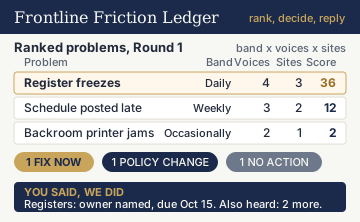
The Frontline Friction Ledger
Five anonymous questions to every location on Monday. Paste the answers Friday and the ledger ranks what crews work around by frequency, respondents and sites, merges duplicates, gives each item a decision, and prints the you-said-we-did reply the same day, which is the only reason the next round gets answered.
Before this: Store Walk Kit. After this: The Frontline Friction Automation Pack.
Buy the Ledger
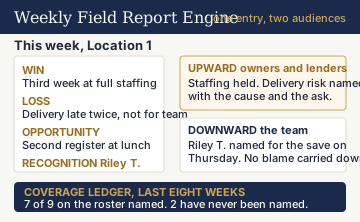
The Weekly Field Report Engine
One weekly entry per location, wins, losses, opportunities and recognition, produces an upward report for owners and lenders and a downward note to the team in the right register. The coverage ledger shows who has been named and who never has, and the criteria builder makes recognition a rule instead of a mood.
Before this: Store Walk Kit. After this: The Weekly Field Report Automation Pack.
Buy the Engine
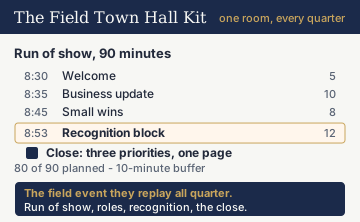
The Field Town Hall Kit
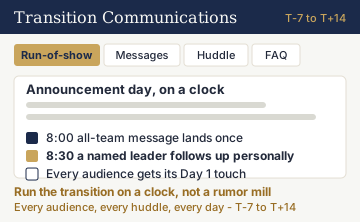
The field town hall eats a morning and the room forgets it on the drive home, because the hours were updates read off slides. This kit assembles the whole event before a slide exists - the settle-first decisions, a timed run of show with named owners, a staffed room, recognition sequenced so the right people are in it, numbers a cashier can repeat, and a close that leaves the organization carrying three priorities.
Before this: The Weekly Field Report Engine. After this: The Field Newsletter Kit.
Buy the Kit
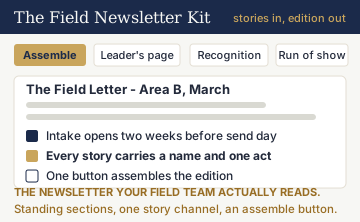
The Field Newsletter Kit
Good stories die in group chats, recognition happens once in a hallway, and teams hear about openings somewhere else before their own leader mentions them. This kit fixes the letter itself: standing sections that never change, a leader's page that sets three priorities, a recognition board that names names, and one button that assembles the printable edition.
Before this: The Field Town Hall Kit. After this: The Annual Event Planning Calendar.
Buy the Kit
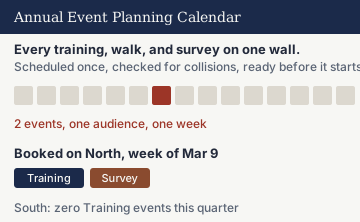
The Annual Event Planning Calendar
Trainings, store walks, surveys, and seasonal reads get booked by different people in different spreadsheets, so they collide, go dark for a quarter, or arrive unprepared. This tool puts every recurring event stream on one twelve-month wall, with lead times and readiness checklists, and flags double-booked weeks, blackout violations, and coverage gaps before they land.
Before this: OGSM for Operators. After this: Field Leader Template Pack.
Buy the Calendar
The Dignitary Tour Kit
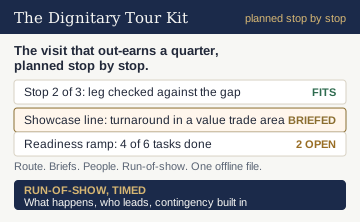
Once or twice a year an operator hosts the hour that out-earns a quarter, and most meet it with a swept lot and hope. This kit runs the whole program instead: engineer the route and catch a leg the drive time can't make, write a one-page brief and a career-arc bio for every stop, count down the readiness tasks before the day, and script the run-of-show so nothing is left to memory.
Before this: The Standards Excellence Scorecard. After this: The Field Newsletter Kit.
Buy the Kit
The Seasonal Readiness Kit
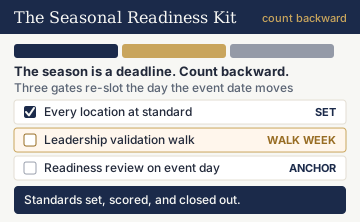
Peak season runs on adrenaline at most operators: standards drift between peaks, the pre-season push is a memo nobody walks, and the contest rewards luck and big stores. This kit turns the season into a dated system -- a countdown that counts backward from the first event day through named gates, a readiness board holding one row per location across five standards domains, print-first role cards, a contest overlay scored on three week-versus-last-year measures any location can win, and a post-season recap that closes the loop while memory is fresh.
Before this: The Annual Event Planning Calendar. After this: The Sales Contest Kit.
Buy the Kit
The Plan Loop
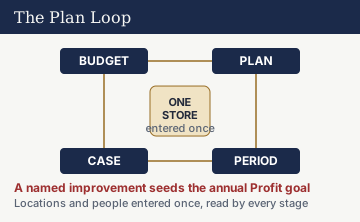
A budget somebody else wrote, the annual objective, the period scorecard and the business case that wins approval for a fix are normally four files that never talk to each other, so a named improvement never becomes a plan commitment and a diagnosis never becomes an action. The Plan Loop runs Budget, Plan, Period and Case on one shared data store, entered once: a named improvement seeds the annual Profit goal and its own action, a complete diagnosis posts to the action grid and can open a business case in one click, and an approved case posts its own roadmap and checkpoint back onto the plan - every handoff printed as a formula, and every broken one a visible flag instead of a silent gap.
Before this: The Budget Reality Test. After this: The Store Business Plan Builder.
Buy the System
The Week Loop
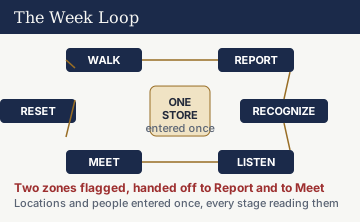
A multi-unit leader running the five Cornerstone tools types the same locations and the same people five times over, and nothing one tool finds ever reaches the next until someone remembers to bring it up. The Week Loop runs Walk, Report, Recognize, Listen, Meet and Reset on one data store, entered once: a flagged zone from the walk lands on the report and the next meeting agenda by itself, a coaching read leads with the recognition that actually met the standard, and a metric that has been an opportunity for two periods running becomes a real commitment on the ledger, not a memory.
Before this: Store Walk Kit. After this: The One-on-One Operating System.
Buy the System
Build the Bench
Someone is ready for more, or someone needs to be. Hiring, onboarding, certifying and holding a visible standard, so the next promotion is a decision you can defend.
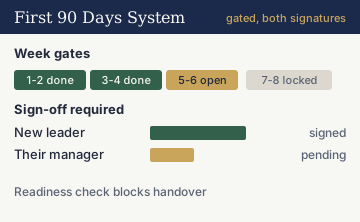
The First 90 Days System
A new leader taken to standard on a schedule, not on hope. Gated weeks that need both signatures, a readiness check that blocks the handover until it is earned, and a written record of what was covered and what was not.
Before this: The Manager Hiring Panel Kit. After this: Leadership Onboarding Portal.
Buy the System
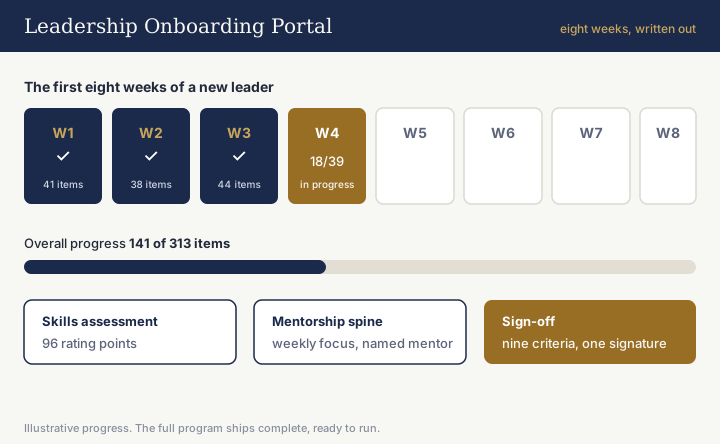
Leadership Onboarding Portal
The first eight weeks of a new multi-unit leader, written out completely: 313
checklist items, a skills assessment, a mentorship spine, and a nine-point sign-off
protocol. The program a firm would bill five figures to build.
Before this: The First 90 Days System. After this: The Department Certification System.
Illustrative data shown
Buy the Portal
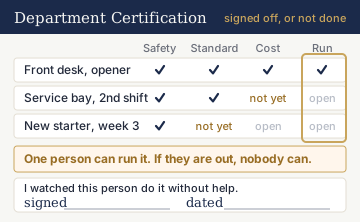
The Department Certification System
Who is genuinely signed off on which station, and exactly where you are one person deep. The sign-off will not take a check without a name, a whole department at once, or a not-yet with no reason written beside it.
Before this: Leadership Onboarding Portal. After this: The One-on-One Operating System.
Illustrative data shown
Buy the Certification System
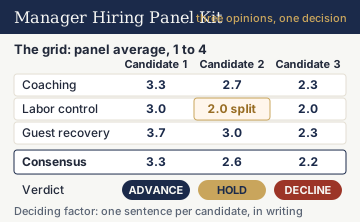
The Manager Hiring Panel Kit
One opening, three candidates, three panelists. Each panelist asks one competency and scores all five, which is what turns three opinions into one comparable grid. Prints the scoring sheets, rolls up the comparison, writes a one-page evaluation per candidate and keeps the runners-up warm for the next opening.
After this: The First 90 Days System.
Buy the Kit
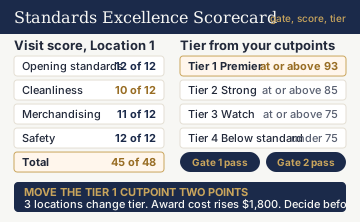
The Standards Excellence Scorecard
A store standards program with the engine behind it: editable standards and points, visit scoring with history, variance bands, grade cutpoints, two qualification gates, tier assignment, and the sensitivity view that shows how many locations move tier and what the incentive costs when you move a threshold.
Before this: Store Walk Kit. After this: The Standards Excellence Automation Pack.
Buy the Scorecard
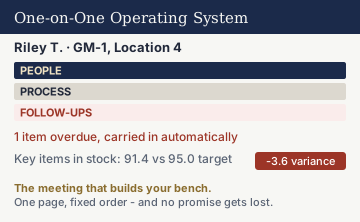
The One-on-One Operating System
Weekly one-on-ones drift to whoever is loudest, so promotions, slipping processes, and off-plan numbers only surface when something breaks. This tool runs a fixed People-Process-Performance agenda every cycle, carries every open commitment onto a ledger that will not let it die, and flags a thin talent pipeline weeks before an open seat becomes a crisis.
Before this: Performance Email Generator. After this: The IDP and Mid-Year Review Kit.
Buy the System
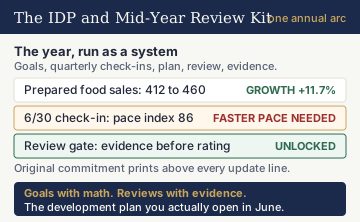
The IDP and Mid-Year Review Kit
Goals get set in January with no math in them, the development plan is signed and never opened again, and the mid-year review gets written in the parking lot an hour before the conversation. This kit runs the annual arc as a system instead: every goal carries baseline-to-target arithmetic and the report that proves it, every quarterly check-in records what hurt and what helped, and the mid-year overall indicator stays locked until every capability is rated with a specific behavior and its impact.
Before this: The One-on-One Operating System. After this: The Category Manager Training Program.
Buy the Kit
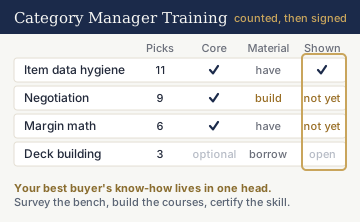
The Category Manager Training Program
The strongest buyer's know-how lives in one head, and every new hire learns by trial and error while the owner does the teaching personally. This kit turns that know-how into a program any capable facilitator can run: survey the team so training follows counted demand, sort every topic by whether the material exists, must be built, or can be borrowed free, build each course on a fixed five-part shell, and close a topic only when the learner demonstrates the skill and the topic's owner signs.
Before this: The IDP and Mid-Year Review Kit. After this: The Category Strategy Deck.
Buy the Kit
The Field Consulting Method
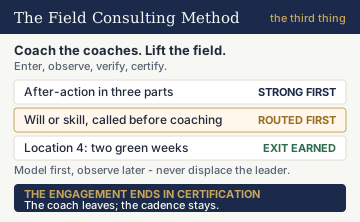
A distributed field organization runs at two speeds - send a memo or replace the leader - and neither builds the bench. This kit runs the third option as a system: an entry assessment with minimum expectations agreed in writing, observed store visits with after-action reports that will not generate until they are complete, a red-location tracker that separates will from skill before anyone coaches, and an exit that closes only when the field leader and the area manager are certified to run the cadence without the coach.
Before this: The Weekly Field Report Engine. After this: The One-on-One Operating System.
Buy the Kit
The Bench Loop
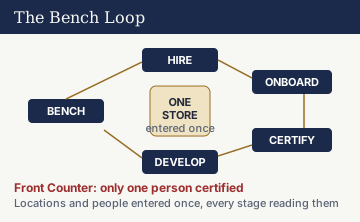
A multi-unit owner growing a bench runs a hiring panel, an onboarding program, a certification system and an annual review kit as five separate files, so the runner-up who almost got the job, the skill that got sent back twice and the station nobody covers never once reach each other. The Bench Loop runs Hire, Onboard, Certify, Develop and Bench on one data store, entered once: a confirmed hire lands on the roster by itself, a completed onboarding assigns the new person to their first department, a skill sent back a second time becomes a named action on the development plan, and the coverage board shows exactly where the business has no one who can run the station.
Before this: The Manager Hiring Panel Kit. After this: The First 90 Days System.
Buy the System
Automate the Work
Once a system earns its place in your week, the next question is how much of it a machine can drive. These attach to a system you already own and move the typing, the chasing and the scheduling off your desk.
The Automation Method
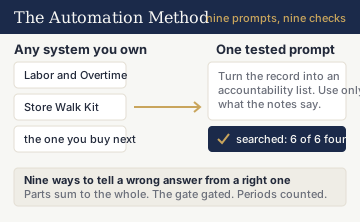
For anyone who owns more than one system. Nine prompts that run on the records you already keep, nine checks that catch a wrong answer before you act on it, and the method for adapting either one to any tool in this catalog. Nothing to install and nothing connected to your systems.
After this: The Store Walk Automation Pack.
Buy the Method
The Labor and Overtime Automation Pack
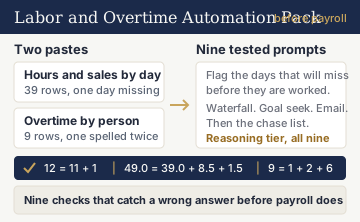
The add-on to the Labor and Overtime Control Center. Nine prompts that turn the weekly hours and overtime paste into the days that will miss, the overtime waterfall, the hours to cut and the email that goes out, plus the checks that catch a wrong number before payroll runs.
Before this: The Labor and Overtime Control Center. After this: The Weekly Field Report Engine.
Buy the Pack
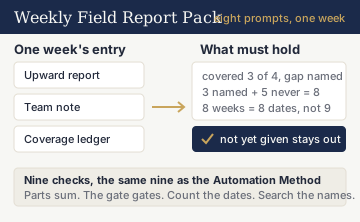
The Weekly Field Report Automation Pack
The add-on to the Weekly Field Report Engine. Eight prompts that turn one weekly entry into the report an owner or a lender reads and the note the team reads, in the right register for each, with the coverage ledger and the checks that keep the two documents telling the same story.
Before this: The Weekly Field Report Engine. After this: Performance Email Generator.
Buy the Pack
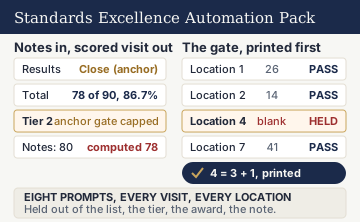
The Standards Excellence Automation Pack
The add-on to the Standards Excellence Scorecard. Eight prompts that turn visit notes into a scored record, the visit report, the period roll-up and the tier conversation, with the checks that keep a location that failed a gate out of the ranking, the tier count and the award.
Before this: The Standards Excellence Scorecard. After this: Store Walk Kit.
Buy the Pack
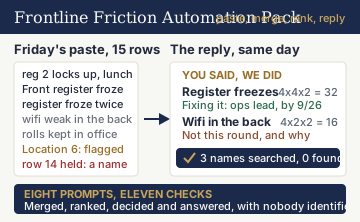
The Frontline Friction Automation Pack
The add-on to the Frontline Friction Ledger. Eight prompts that turn a week of anonymous crew answers into merged items, a ranked ledger, a decision for each and the reply that goes back the same day, with the checks that keep any one respondent from being identifiable in what you send.
Before this: The Frontline Friction Ledger. After this: The Quick Win Planner.
Buy the Pack
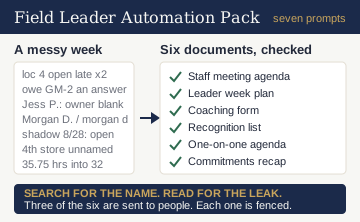
The Field Leader Automation Pack
The add-on to the Field Leader Template Pack. Seven prompts that turn a week of visit notes, coaching prep and open commitments into the staff meeting agenda, the week plan, the coaching form and the one-on-one agenda, with the checks that keep a private line out of a document you are about to send.
Before this: Field Leader Template Pack. After this: The Store Walk Automation Pack.
Buy the Pack
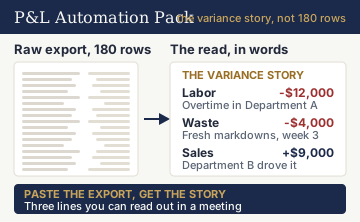
The P&L Automation Pack
The add-on to the P&L Analyzer. Nine prompts that turn a statement export into the variance story, the operating causes worth chasing, and the three questions to ask the manager this week, plus how to tell a wrong answer from a right one.
Before this: P&L Analyzer. After this: The Peer Review P&L Meeting Kit.
Buy the Pack
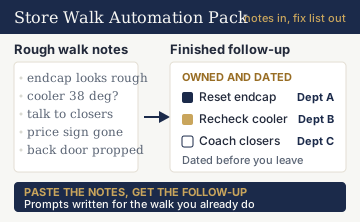
The Store Walk Automation Pack
The add-on to the Store Walk Kit. Eight prompts that turn the messy notes on your phone into the follow-up email, the accountability list with owners and dates, and the three items to re-check next walk. Nothing to install and nothing connected to your systems.
Before this: Store Walk Kit. After this: The Weekly Field Report Engine.
Buy the Pack
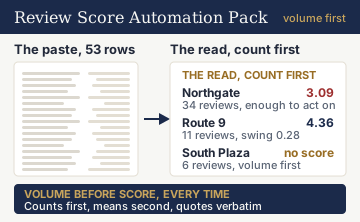
The Review Score Automation Pack
Review scores get read backwards: a 4.4 over eleven reviews outranks a 3.1 over thirty-four, and the fix goes to the wrong store. This pack runs seven prompts over the export you already get - volume tiers, one complaint theme per location with verbatim proof, the placed ask, the five-line daily note, replies in the owner's voice, and a day-22 re-measure that reads volume before score.
Before this: The Review Score Sprint. After this: The Quick Win Planner.
Buy the Pack
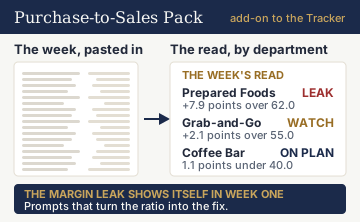
The Purchase-to-Sales Automation Pack
A department's margin trouble hides until the period closes - unless the purchases-to-sales ratio is read weekly. Eight prompts run in an ordinary AI chat on the same invoice figures and weekly sales the Purchase-to-Sales Tracker holds: set a target that is real in the buyer's own words, turn a messy receiving log into import-ready rows with every name matched, read the week against one fixed pair of bands, run the three-cause leak diagnostic in its fixed order, brief a two-week streak with the dollars shown as arithmetic, reconcile a zero-purchases week before it poisons the trend, read the thirteen-week dashboard with its sales-weighted target, and tell the month's margin story for the P&L review. The Tracker computes; the prompts do the reading and the writing.
Before this: Purchase-to-Sales Tracker. After this: The Inventory Count Automation Pack.
Buy the Pack
The Inventory Count Automation Pack
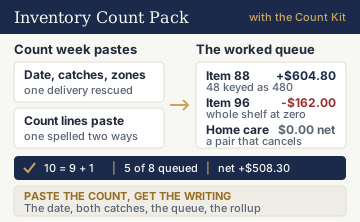
The count is one night; the number is made or broken in the two weeks before it and the morning after. Nine prompts run in an ordinary AI chat on the same data the Physical Inventory Count Kit holds: prove the paste was read before any math, pick a date the whole cast can make with its backward milestones, run both catches in writing, brief a first-time crew, zone the building, work the research queue to a mechanical cause on every line, read the rollup's net-versus-absolute for what it says, and write next year's memory. The Kit computes; the prompts do the reading and the writing around it.
Before this: The Physical Inventory Count Kit. After this: Purchase-to-Sales Tracker.
Buy the Pack
The Hiring Panel Automation Pack
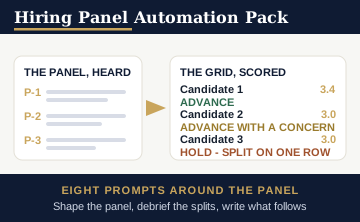
Every manager hire drifts the same way: three panelists, three opinions, whoever felt strongest decides. The Manager Hiring Panel Kit already fixes the structure; this pack is the eight prompts around it. Shape the competencies to your business, screen every question for lawful ground, turn messy notes into lines that hold up weeks later, call the verdict by rule from the grid, run the debrief so the split scores get talked out before anyone anchors, and draft the reference questions, the ninety-day concern, the decline note, and the reach-back to the runner-up when the next opening appears.
Before this: The Manager Hiring Panel Kit. After this: The First 90 Days System.
Buy the Pack
The Statement Recovery Automation Pack
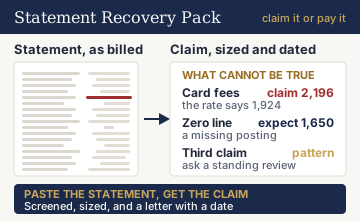
Every statement month carries lines that cannot be true - a fee billed at double its trailing rate, a never-zero line reading zero, a first-time charge nobody can explain - and finding them after the money moves is the expensive way. Seven prompts run in an ordinary AI chat on the same line dictionary the Statement Error Recovery Kit builds: prove the paste was read before any math, fire findings with test codes and shown bases, size claims at the trailing rate with references assigned, write one letter per counterparty with a countable escalation date, read the reply against its own support, escalate once on the date, and turn the third occurrence of a line into an account-level ask.
Before this: The Statement Error Recovery Kit. After this: P&L Analyzer.
Buy the Pack